
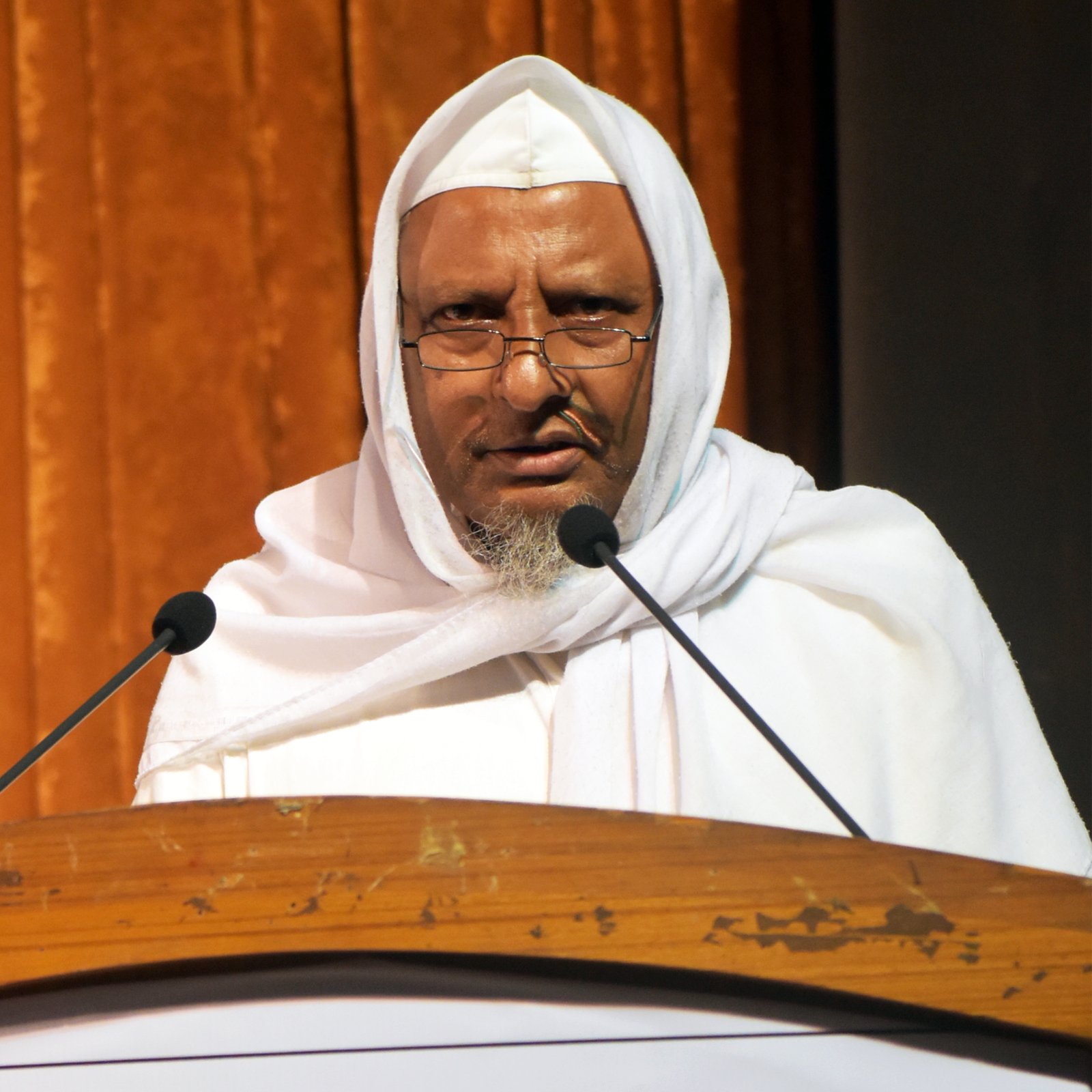
Darul Qaza
"Settling disputes between people according to the laws revealed by Allah"
Introduction
Islam is a complete way of life. Allah Ta'ala has explained the rules and principles of human life through the Shariah. A person who conducts his personal, family, and social life according to the Shariah is regarded as a true Muslim.
In the social and family life of Muslims there are several important matters such as marriage, divorce (talaq), khula, hiba (gift), and inheritance. Sometimes disagreements arise between the concerned individuals regarding these issues. In such situations, a proper system is necessary to settle these disputes according to Islamic law. Darul Qaza provides this system and therefore forms an essential part of the Islamic social structure. Without the presence of Darul Qaza, the implementation of the Islamic way of life remains incomplete.
The settlement of disputes between people according to the laws revealed by Allah is known as Qaza. The importance and necessity of this system are clearly established through the Qur'an, the Sunnah of the Prophet Muhammad (peace be upon him), and the consensus of the scholars.
Darul Qaza in the Light of the Qur'an
The Qur'an clearly emphasizes the importance of judging according to the laws revealed by Allah.
Furthermore, in Surah Al-Ma'idah (42), Allah instructs that whenever a judgment is made, it should be done with justice, and He loves those who judge with fairness.
These verses clearly show that justice based on divine guidance is a fundamental principle in Islam.
Darul Qaza in the Time of the Prophet and the Khulafa-e-Rashideen
The Prophet Muhammad (peace be upon him) himself acted as a judge and settled numerous disputes among people during his lifetime. He also appointed several companions to serve as judges in different regions.
The first Caliph personally carried out judicial responsibilities and appointed judges in different regions. During his time, Hazrat Umar (RA) served as the chief judge.
He organized the judiciary as a separate administrative department, establishing judicial courts in different regions. Hazrat Zaid ibn Thabit served in Madinah, Ka'ab bin Sur in Basra, Ubadah ibn Samit in Palestine, and Abdullah ibn Mas'ud in Kufa.
He carried out judicial duties and appointed Qazi Shuraih as the judge of Kufa.
He likewise served as a judge and played an important role in maintaining justice.
Darul Qaza in Islamic History
Even after the era of the Khulafa-e-Rashideen, the judicial system continued to function during the Umayyad and Abbasid periods. Judges were appointed in different parts of the Islamic world and the institution of Qaza remained active and respected.
The system also existed in regions such as Egypt and Andalusia. During the Ottoman Caliphate, the judicial system reached a highly organized stage. The department of Ifta and the judiciary operated under the authority of the Shaikh-ul-Islam, who worked under the Caliph.
Darul Qaza in India
In India, the system of Darul Qaza existed during the periods of Muslim rule including the Ghaznavid era, the Delhi Sultanate, and the Mughal Empire. Many renowned scholars and judges served in the judicial department during these times.
The system continued even during the early period of British rule.
However, in the year 1864 the British administration officially abolished the Qaza system in India.
Revival of Darul Qaza in Modern India
After the abolition of the system, scholars made several attempts to revive it but were unsuccessful for a long time.
Finally, in 1921, through the dedicated efforts of Maulana Abul Muhasin Muhammad Sajjad, the organization Emarat e Shariah was established in Bihar. Through this institution the system of Darul Qaza was revived again.
Establishment of Darul Qaza in North East India
In the North Eastern region of India, such a judicial system did not previously exist. The pioneer of Islamic revival in this region, Hazrat Maulana Abdul Jalil Choudhury, established Emarat e Shariah in 1976.
Through this organization, Darul Qaza was formally established on 17 April 1977. Before appointing a permanent Qazi-ul-Quzat for the central Emarat, the responsibilities of the judicial department were temporarily assigned to Maulana Faizul Jalal, Hazrat Maulana Tayebur Rahman Borbhuiya, and Maulana Ataur Rahman Laskar of Fulbari.
Several scholars were appointed as Qazi and Naib Qazi in the districts of Karimganj, Hailakandi, and Cachar.
Initial Appointments — 30 July 1978
| Qazi e Shariat | Maulana Abdul Jalil Singari |
| Naib Qazi e Shariat | Maulana Abdul Khaliq |
| Qazi | Maulana Abdur Rahman of Rautgram |
| Qazi | Maulana Abdus Samad of Bhitorgul |
| Qazi e Shariat | Allama Tayeebur Rahman Barbhuiya |
| Naib Qazi | Maulana Abdur Razzaq Qasimi |
| Qazi | Maulana Abdul Haq Sadrbandi |
| Qazi e Shariat | Maulana Ataur Rahman Laskar of Fulbari |
| Naib Qazi | Maulana Azir Uddin of Ganirgram |
| Naib Qazi | Maulana Tabarak Ali of Fanimukh |
| Naib Qazi | Maulana Muhammad Ali Laskar of Chandpur |
| Appointed | Maulana Faizul Jalal |
| Appointed | Maulana Muhibur Rahman Qasimi |
| Appointed | Maulana Abdus Shahid Qasimi |
| Appointed | Maulana Jalal Ahmad Khan |
| Appointed | Maulana Abdur Rahim Qasimi |
Structure of the Qaza Department
The Qaza department functions at several administrative levels including regional, district, state, and central levels. The Qazis are appointed by the Ameer e Shariat.
Role and Importance of Darul Qaza
Darul Qaza plays an important role in resolving family and social disputes among Muslims in accordance with Islamic principles. It also assists in matters such as verifying the sighting of the moon for Ramadan and Eid.
In addition, Darul Qaza functions as an important institution for the application of Islamic jurisprudence (Fiqh) in practical life. It provides guidance and decisions on matters related to Muslim Personal Law, including issues such as marriage, divorce, khula, maintenance, inheritance, and other family-related concerns. Through the knowledge of the Qur'an, Hadith, and classical juristic principles, the Qazis interpret and apply Islamic legal rulings to address contemporary social issues faced by the Muslim community.
Through this judicial system many Muslims, especially women facing social difficulties, have received justice and the opportunity to live a stable and dignified life.
Family Dispute Resolution
Resolving matters of marriage, divorce, khula, maintenance, and inheritance in accordance with Islamic law.
Moon Sighting Verification
Assisting in matters such as verifying the sighting of the moon for Ramadan and Eid.
Application of Fiqh
Interpreting and applying Islamic legal rulings to address contemporary social issues faced by the Muslim community.
Justice for the Vulnerable
Ensuring that many Muslims, especially women facing social difficulties, receive justice and the opportunity to live a stable and dignified life.
At present, the responsibilities of the Central Darul Qaza are being carried out under the supervision of Maulana Ashab Uddin of Ratabari, who serves as the Secretary of the Darul Qaza Department. The judicial responsibilities are supported by three Central Qazi e Shariat, who oversee and guide the functioning of the Darul Qaza system.
In addition to the central level, the judicial structure of Darul Qaza is organized at different administrative levels. Each Anchalik (regional) unit has an Anchalik Qazi e Shariat, and every district has a District Qazi e Shariat who handles cases and resolves disputes in their respective areas according to the principles of the Qur'an, Hadith, and Islamic jurisprudence.